Reporting Web App
Simplifying reporting workflows for institutional clients
- Web Application
- Product
- Fintech
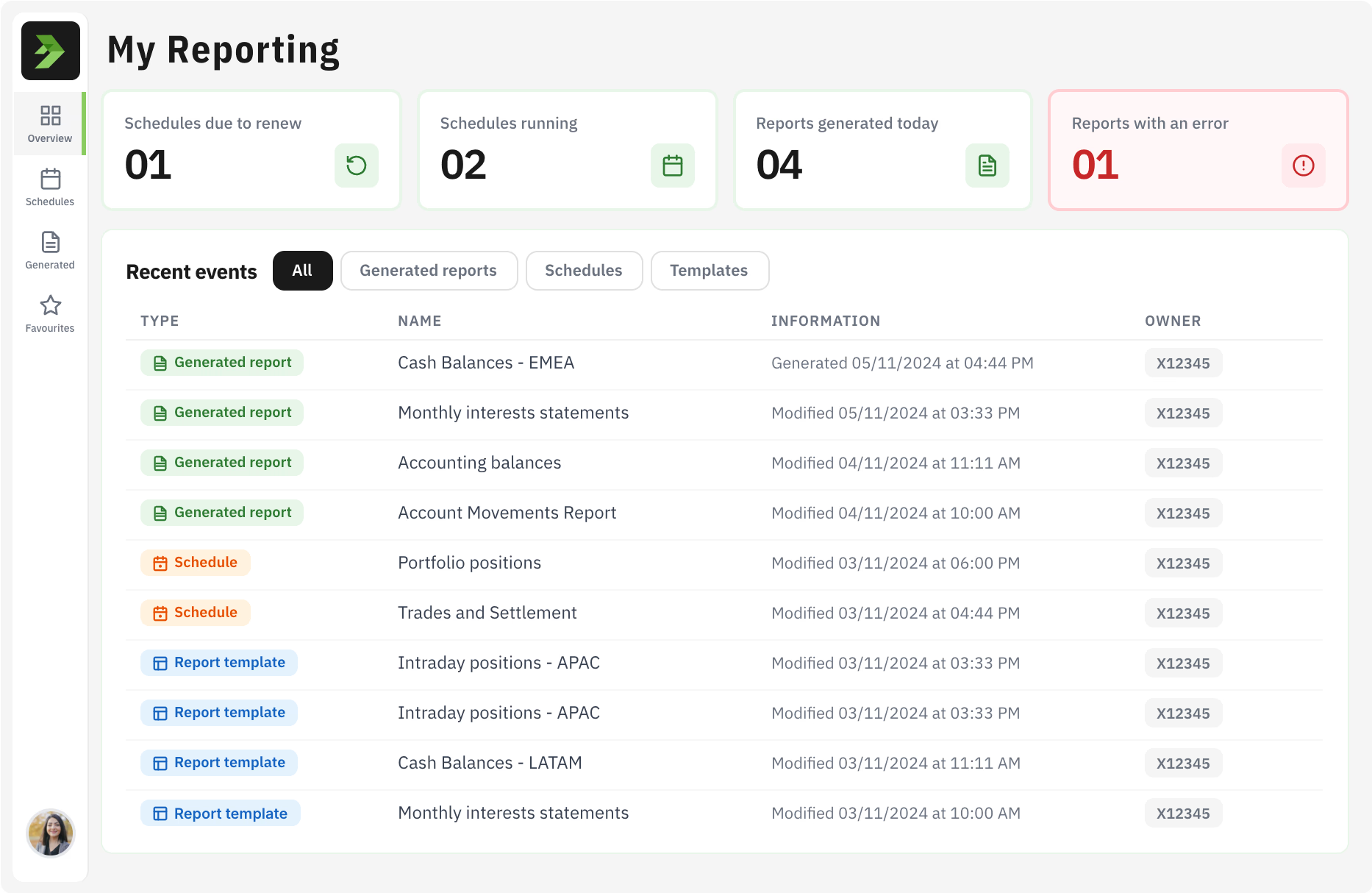
Visuals have been recreated due to confidentiality restrictions.
- Role
- Lead Product Designer
- Scope
- Reporting platform for institutional clients
- Target
- Reduce reliance on internal support teams + faster report generation
My Contribution
- Led UX strategy and redesign efforts
- Mapped out and simplified complex reporting workflows
- Facilitated stakeholder alignment across multiple business areas
- Collaborated with Product, Engineering, Marketing, and external partners
Key Outcomes
- Improved report discovery and usability
- Reduced workflow fragmentation
- Increased transparency of report contents
- Reduced dependency on internal support teams
Overview
I led the redesign of a reporting platform used by institutional clients within a large financial services environment. The goal was to simplify complex reporting workflows, reduce operational friction, and improve the overall usability of the experience.
The platform allowed users to generate, customise, and schedule financial reports, but the existing experience had become difficult to navigate and heavily dependent on internal support teams.
The Problem
Clients consistently struggled with the complexity of the reporting experience. Common pain points included:
- difficulty identifying the correct report among a large catalogue of options
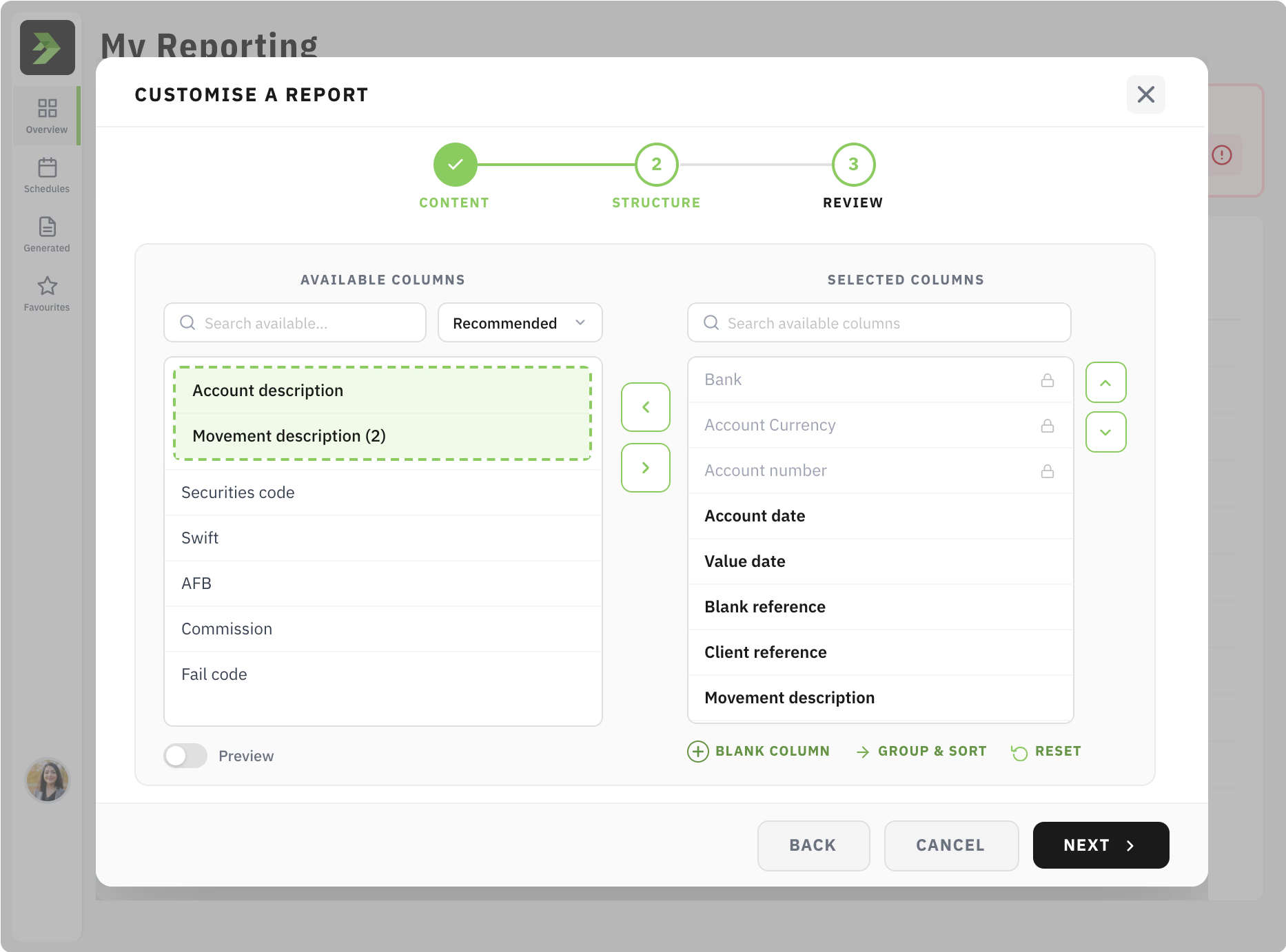
- limited visibility into the data contained within reports before generation
- fragmented workflows for customisation and scheduling
- lack of guidance and error prevention during report configuration
As a result, many users relied heavily on internal operational teams to identify reports, configure settings, and schedule deliveries on their behalf.
The experience created unnecessary friction for both clients and internal teams, while reducing confidence in the platform overall.
Key Challenges
Balancing user needs with competitor-driven requirements
Part of the project was influenced by competitor benchmarking exercises, with requests to replicate advanced features such as spreadsheet-style formulas and chart generation capabilities.
While some of these features appeared valuable initially, the team and I challenged several assumptions throughout the process to ensure we were solving real user problems rather than introducing complexity for the sake of feature parity.
This required balancing stakeholder expectations with usability, product clarity, and long-term maintainability.
Guiding Principles
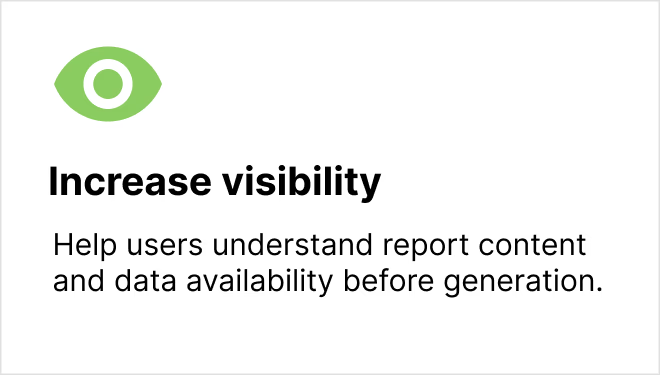
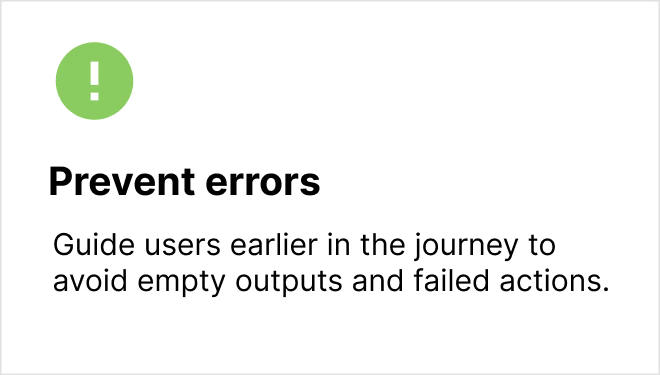
The redesign was guided by a set of principles designed to simplify reporting while maintaining flexibility and control.
Navigating Cross-Functional Complexity
Because reporting was a transversal capability used across multiple areas of the platform, the project involved navigating a complex stakeholder landscape across Digital, Product, UX, and Senior Management teams.
Aligning priorities and creating a shared understanding of user problems became a critical part of the design process.
Key Improvements
The redesign focused on:
- Simplifying report discovery and selection
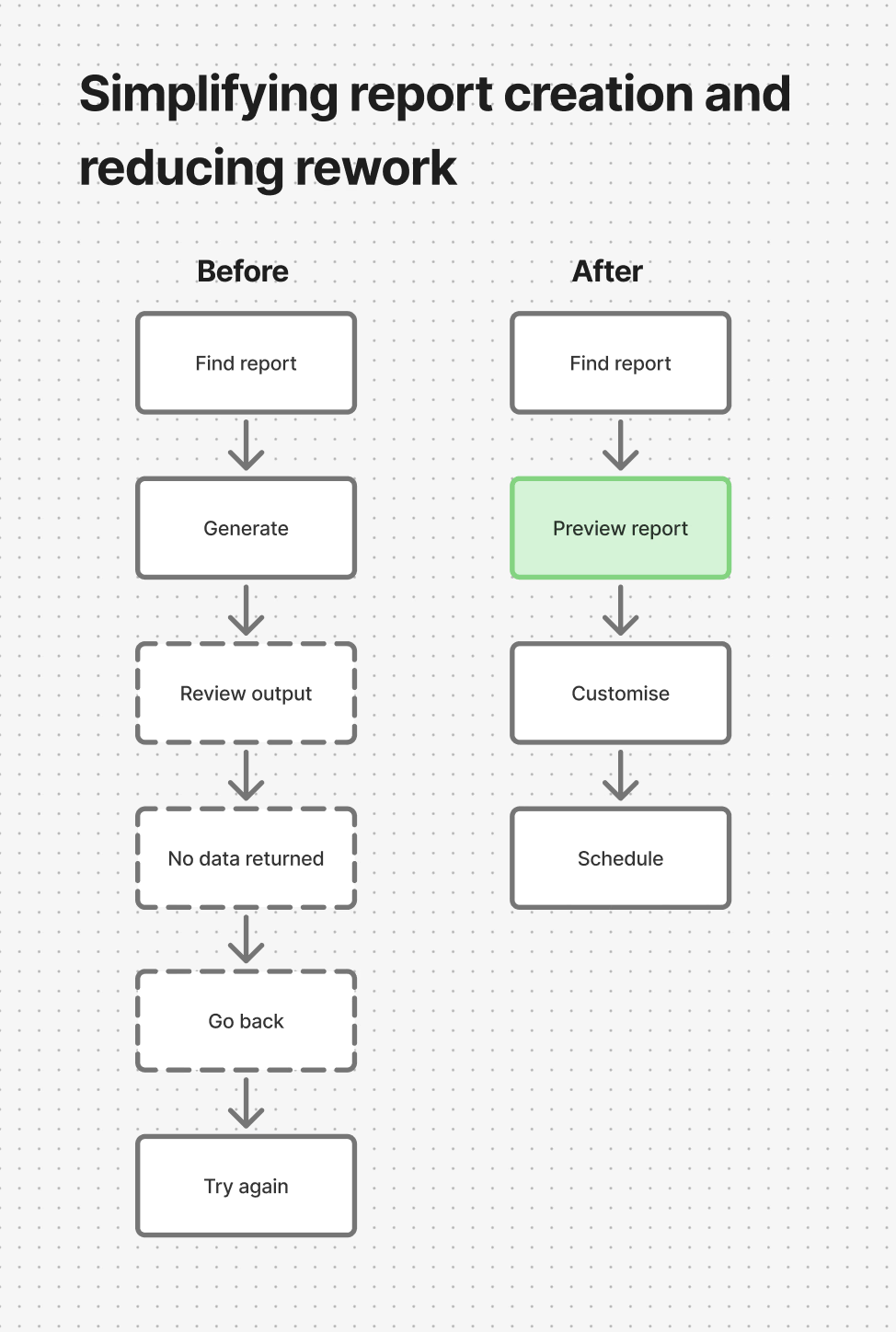
- Improving visibility into report content before generation
- Reducing user errors and empty report generation
- Consolidating fragmented workflows into more coherent journeys
- Creating clearer guidance throughout configuration and scheduling flows
Outcome
The redesign simplified complex reporting workflows by improving visibility, reducing rework, and introducing earlier validation.
The result was a more predictable and scalable experience that reduced friction for users and internal teams.